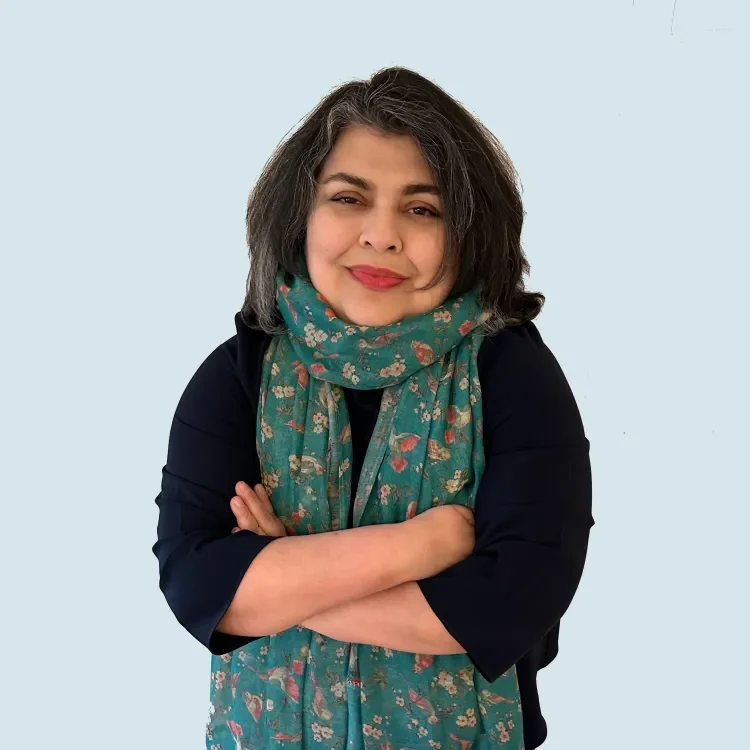
Ep. 100: Bringing Indian Classics to us all with Harvard University Press's Editorial Director Sharmila Sen
“There's nothing dead about the Indian classics. It's not a revival of anything. It's not a museum piece. I think our classical tradition is alive through the stories our parents and grandparents told us…[and through popular culture]…..but with few exceptions, we don't know about the classics from our neighboring state, right? I always hope that the girl in Chandigarh can read a Mangal Kavya from Bengal, a boy in Patna can read a Telugu classic. Someone sitting in your old hometown, Pune can read Bulleh Shah.”
🎙️ In this episode (100!) of The Indian Edit, join me with writer, scholar, and Editorial Director of Harvard University Press, Sharmila Sen. We explore Sharmila’s personal journey from growing up in Bengal to immigrating to the United States as a child, her reflections on race, belonging, and visibility, and her work stewarding the linguistically ambitious literary project: The Murty Classical Library of India.
🧭 Shownotes for Episide 100:
Growing Up Between Worlds
Sharmila’s childhood in Calcutta (Kolkata) and her move to Cambridge, Massachusetts in 1982
Assimilation, accent, and the desire to “disappear” as a young immigrant
Learning Americanness through television, language, and cultural mimicry
Race, Privilege, and Visibility
Coming to understand race in the U.S. as an immigrant from India
The contrast between being part of a dominant group in India and a racial minority in America
The persistent “foreignness” assigned to Asian Americans
Passing, names, and the refusal to erase one’s identity
Language as Identity
Bengali as a lived, literary, and emotional language
Experiences living and working in Pakistan and Bangladesh
Learning Urdu (including Nastaliq script) and Punjabi
The cultural and political significance of language in South Asia
The Murty Classical Library of India
Founded in 2010 with support from Rohan Murty
Inspired by Harvard’s Loeb Classical Library (Greek & Latin classics)
Publishes bilingual editions (original text + English translation)
Covers 2,500 years of writing across 19 South Asian languages
Aims to make Indian classics accessible to scholars, general readers, and future generations
Ten Indian Classics (10th Anniversary Anthology)
Curated selections from the Murty Classical Library
Spans 2,500 years and 9 languages
Includes:
Poems of the early Buddhist nuns (Therīgāthā)
Tulsidas’s Ramayana
Sufi poetry by Bulleh Shah
Guru Nanak’s hymns
Persian chronicles of Emperor Akbar
Urdu, Tamil, Sanskrit, Punjabi, and more
Explores the idea of classics as living traditions, not museum artifacts
Why Indian Classics Still Matter
Classics as “background noise” that continues to shape culture
Stories and verses that live on through oral tradition, popular culture, and daily life
Reading across regions and languages as an act of cultural connection and nation-building
📚 Books & Resources Mentioned
Not Quite Not White – Sharmila Sen (memoir)
The Murty Classical Library of India (Harvard University Press)
Ten Indian Classics – Edited by Sharmila Sen
Amar Chitra Katha
The Ramayana and Mahabharata (regional retellings)
🔗 Find all books and resources at theindianedit.com
📢 Stay Connected — If you enjoyed this episode:
Share it with a friend
Follow the podcast on Instagram @theindianeditpodcast
Visit theindianedit.com for full show notes and links